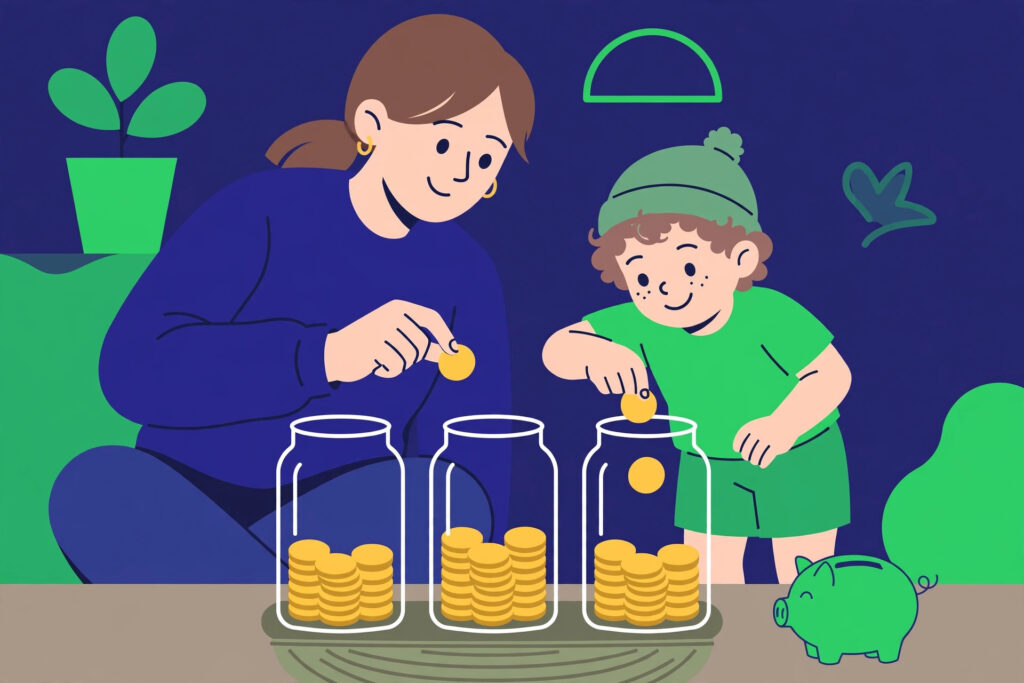
Kids learn about money the way they learn language: by watching you and by practicing early. You do not need a curriculum — just age-appropriate reps.
Ages 3–5: Money is real and choices exist. Let them handle coins, pay the cashier sometimes, and use two clear jars: Save and Spend. When the Spend jar is empty, the answer is "we can wait until it fills again" — the earliest lesson in limits.
Ages 6–9: Waiting and choosing. A small allowance with three jars — Save, Spend, Give — teaches the three jobs money has. Institute a one-week waiting rule for non-trivial wants; most "gotta have it" urges evaporate in seven days.
Ages 10–13: Planning a purchase. Have them budget for something they want: research prices, compare options, save over weeks. The pride of buying it themselves teaches more than any lecture about value.
Teens: Earning and growing. Part-time money is the best teacher. Show them compound growth with a simple example — even a tiny investment growing over decades is unforgettable when it is their own money on the line.
The hidden lesson through every age: how you talk about money at home. Calm, honest, and team-based beats perfect every time.
Leave a Reply