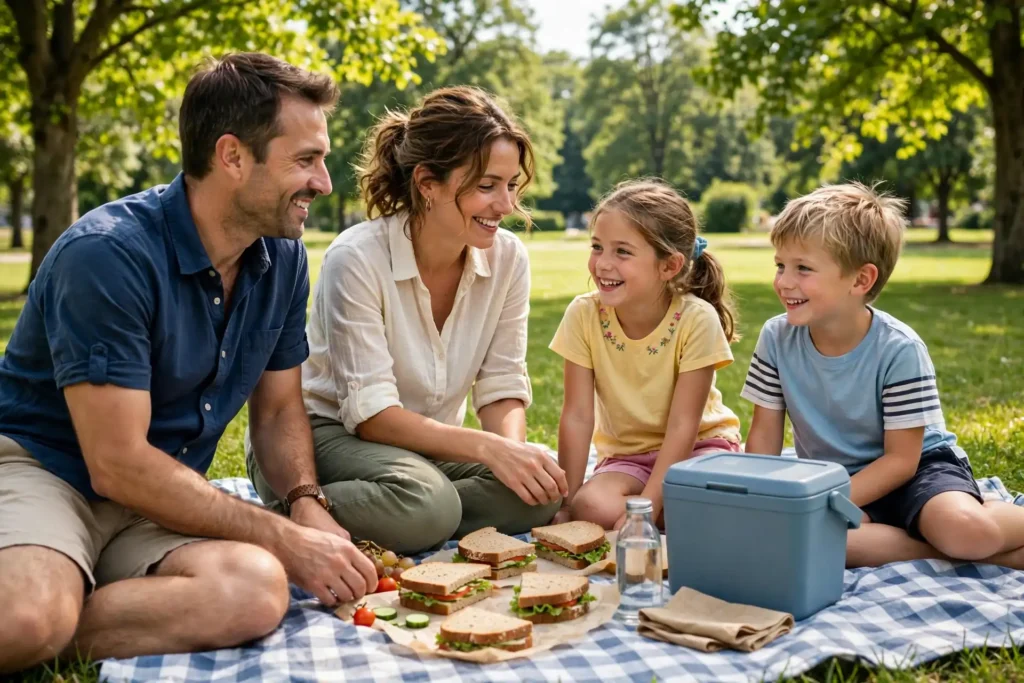
Summer changes travel food costs because summer changes the days themselves: heat that spoils food and appetites, long daylight that stretches the eating day, outdoor plans that move meals to parks and beaches, and children who are out of school and hungry on their own schedule. Planning food for a summer trip means planning around those realities — a cooler in the car, picnics and seasonal markets in the meal mix, water bottles always filled, and a little extra care with food safety in the heat. Do that, and summer food becomes one of the trip’s pleasures instead of its steadiest leak.
Key Takeaways
- Summer adds eating occasions: long days, outdoor activities, and out-of-school kids mean more snacks and more meals away from a kitchen.
- Heat is both a budget issue and a safety issue — food left in a hot car spoils fast, so a cooler and a little planning protect your money and your stomachs.
- Summer is the easiest season to eat well for less: picnics, farmers markets, farm stands, and simple no-cook meals are at their best.
- Hydration is a real food cost in summer. Refillable bottles and drinks bought as groceries keep it from becoming a constant drip of single purchases.
- Plan the day’s eating rhythm in the morning — where lunch will come from, where the snack supply lives, which meal is the day’s main event.
- Venue food at fairs, festivals, and ballgames is part of the fun; budget it as the day’s treat rather than pretending it will not happen.
In This Guide
- Why Summer Changes Travel Food Costs
- Heat and Food Safety: The Non-Negotiables
- The Cooler: Your Summer Budget Tool
- Eat With the Season: Markets, Farm Stands, and Picnics
- Hydration Without the Constant Drink Purchases
- Plan the Day’s Eating Rhythm
- A Simple Step-by-Step Summer Food Plan
- Frequently Asked Questions
- Your Next Step
- Related Articles
Why Summer Changes Travel Food Costs
If you have only ever planned food for a spring city break, a summer trip can surprise you. The differences are practical, not mysterious:
- Longer days mean more eating occasions. When it stays light late and everyone is up early, the day stretches — and so do the requests for snacks, second breakfasts, and something small after an evening walk.
- Outdoor plans move meals away from restaurants and kitchens alike. Beach days, hikes, lake afternoons, and park evenings are wonderful, but the food has to travel with you, which changes both what you eat and what it costs.
- Children are out of school. The steady rhythm of school-day meals disappears, and kids who are swimming, biking, and playing outside get hungry more often and less predictably than they do in term time.
- Heat changes appetites. Hot afternoons suppress interest in a big lunch and revive it in the cool of the evening; heavy cooked meals appeal less, and cold, simple food appeals more.
- Summer is celebration season. Fairs, festivals, ballgames, and boardwalks all come with their own beloved foods, sold exactly where you are standing, usually at the moment everyone is hungriest.
None of this makes summer travel food a problem — it makes it a planning opportunity, because summer also offers the cheapest and most enjoyable eating of any season, if you lean into it. If the very idea of a travel food budget is new, our explainer on what food costs while traveling include covers the basic categories this plan builds on.
Heat and Food Safety: The Non-Negotiables
Summer food planning starts with safety, because the same picnic that saves money can ruin a trip if it sits too long in a hot car. Keep the guidance simple and general: cold food needs to stay cold, hot food needs to stay hot, and perishable food — sandwiches with mayonnaise, cut fruit, dairy, deli meats, cooked leftovers — should spend as little time as possible at warm temperatures, and never an afternoon in a parked car in the sun.
Practical habits cover most situations: pack the cooler with ice or frozen packs and keep it in the shadiest, coolest spot available; put the cooler in the car last and take it out first; eat picnic food soon after you arrive rather than after hours of sightseeing; and when in doubt about something that has been sitting warm, throw it out — a replacement sandwich costs far less than a ruined day of everyone’s vacation. Food-safety recommendations are updated from time to time, so check the current guidance before a trip; USA.gov is a plain-language starting point that points to the official food-safety resources.
The Cooler: Your Summer Budget Tool
On a road trip, a decent cooler quietly does the work of a whole meal plan. It lets breakfast travel with you, turns lunch into a picnic wherever you happen to be, keeps drinks cold without a purchase at every stop, and holds the snack supply that heads off gas-station improvisation. Stock it from grocery stops rather than convenience stores, refill the ice when you buy groceries, and keep a small “eat first” awareness of the most perishable items.
Flying instead? The cooler shrinks to a strategy: pack shelf-stable snacks in your bags, carry empty water bottles through the airport to fill after security, and make your first stop at your destination a grocery store for the room — fruit, breakfast basics, and drinks — before the first hunger emergency chooses a restaurant for you.
Eat With the Season: Markets, Farm Stands, and Picnics
Summer is when local food is at its most abundant and appealing. Farmers markets and roadside farm stands offer the season’s produce at its freshest, and a market visit doubles as an outing in itself — children graze on samples, you gather the makings of dinner, and nobody has spent the afternoon inside a restaurant queue. Pair market produce with simple staples from a grocery store and you have the classic summer travel meal: sandwiches, fruit, cheese, bread, and something sweet, eaten somewhere with a view.
Picnics deserve a special mention because they solve the summer equation all at once. They are inexpensive, they happen on your schedule rather than a restaurant’s, they work beautifully in the cool of the evening when appetites return, and kids experience them as an event rather than a compromise. Many couples find their most-remembered meals of a summer trip were eaten on a blanket or a harbor wall, not at a table with a menu.
The same logic applies to cooking where you stay. Summer is the forgiving season for simple meals: food that needs little or no cooking — salads, sandwiches, cold pasta, bread and cheese and fruit — suits the heat, keeps a rental kitchen cool, and takes minutes. If your lodging has a grill, one grill night with market vegetables and something simple to cook over the coals can be the evening everyone talks about afterward, at grocery cost rather than restaurant cost. The theme is the same throughout: in summer, the simplest food is often the best food, and it happens to be the kindest to the budget too.
Hydration Without the Constant Drink Purchases
In summer, drinks become a food cost of their own. Hot, active days make everyone thirsty more often, and single bottles and cups bought one at a time, several times a day, for a whole family, add up to a surprising drip. The fixes are unglamorous and effective:
- Give everyone a refillable water bottle and make filling it part of leaving for the day.
- Buy drinks as groceries — a pack for the cooler or the room — for the drinks you know you will want daily.
- Keep the purchased-one-at-a-time drinks for the genuine treats: the lemonade at the fair, the iced coffee on the slow morning. Treats stay treats when they are occasional.
- Remember that small children and older travelers feel heat sooner; water with you, always, is a safety habit as much as a budget one.
Plan the Day’s Eating Rhythm
Summer days go better when the two of you spend two minutes in the morning agreeing on the day’s food shape. It does not need detail — just which meal is the main event, where lunch will come from, and where the snacks live.
| Part of the day | Summer reality | A planning idea that works |
|---|---|---|
| Breakfast | Early starts to beat the heat; kids hungry immediately | Simple food where you stay, from yesterday’s grocery stop |
| Midday | Peak heat, low appetites, far from kitchens | Picnic from the cooler, or a light café stop in the shade |
| Afternoon | Swimming and playing work up big hunger | Planned snack from your supply, not a vending scramble |
| Evening | Appetites return; the day’s social meal | Make this the main meal — cooked, grilled, or eaten out on chosen nights |
| Events | Fairs, festivals, ballgames with their own food traditions | Name the event food as that day’s treat in the plan |
This rhythm also plays nicely with a tighter budget. If money is leaner this summer — after a job change, say — the same structure carries the adjustments: more picnics, fewer restaurant dinners, the splurges chosen rather than stumbled into. Our guide to what changes first for travel food costs after an income drop goes deeper on that reshaping.
A Simple Step-by-Step Summer Food Plan
- Before you book: favor lodging with a fridge, and a kitchen if you can — in summer you will use it for breakfasts, drinks, and picnic supplies even if you never cook a dinner.
- Before you leave: write the grocery list for the first stop — breakfast basics, sandwich fixings, fruit, snack supplies, drinks — and pack bottles, a cooler if you are driving, and a few shelf-stable snacks for the journey.
- On arrival: make the grocery stop early, ideally before the first meal decision is forced by hunger.
- Each morning: spend two minutes on the day’s shape — main meal, lunch source, snack supply, and where the water bottles get filled.
- At events: enjoy the fair or festival food as the planned treat, and let the rest of that day’s eating stay simple around it.
- Each evening: a quick, friendly glance at how the day went, and a note of what to buy or use up tomorrow — especially anything perishable in the cooler or fridge.
Food sits inside the whole trip budget, of course, alongside the drive or flights, the lodging, and the activities. Our pillar guide to planning a family vacation without the credit card hangover shows how the pieces fit together when you are sizing up the trip as a whole.
Frequently Asked Questions
How long can picnic food safely sit in a hot car?
The safe answer is “as short a time as possible.” A parked car in summer sun gets hot fast, and perishable food left in that heat can become unsafe well before it smells or looks wrong. Use a cooler with ice, keep it out of the sun, eat picnic food promptly after arriving, and check the current official food-safety guidance — reachable in plain language through USA.gov — before your trip, since recommendations are the experts’ to set, not ours.
Is a cooler really worth the trunk space on a road trip?
For most families, yes. It converts expensive, rushed food stops into picnics and grocery runs, keeps drinks cold all day, and carries the snack supply that prevents the most impulsive purchases. The space it takes tends to pay for itself in the first couple of days of a summer trip.
How do we handle constant requests for ice cream and snacks?
Plan for them instead of fighting them. Summer treats are part of the season’s joy, so give them a cheerful place in the plan — for example, one bought treat a day, chosen by the kids, with the rest of the snacking coming from your own supply. A known “yes, at the beach this afternoon” ends far more whining than a day of “we will see.”
Are farmers markets actually a good budget move, or just a nice outing?
Both, honestly. Seasonal produce at a market is often good value and at its best quality, and the market itself is free entertainment. It works best when you shop with a meal in mind — tonight’s dinner, tomorrow’s picnic — rather than gathering beautiful ingredients with no plan, which can end in waste in a rental fridge.
What about food at fairs, festivals, and ballgames?
Enjoy it, on purpose. The special foods at summer events are part of what you went for, so name them in the plan as the treat for that day and keep the day’s other meals simple around them. What strains a budget is not the festival food itself — it is festival food arriving on top of a full restaurant day that nobody had planned either.
We are flying to our destination. What changes?
The cooler stays home, so the strategy shifts to what you carry and what you buy on arrival: shelf-stable snacks in your bags, empty bottles to fill after security, and an early grocery stop for the room. Picnics still work — buy picnic supplies locally and carry them in a day bag — and all the rhythm planning stays the same.
Your Next Step
Before your next summer trip, write two short lists together: the first grocery stop (breakfast basics, picnic fixings, drinks, snacks) and the journey supplies (bottles, cooler if driving, shelf-stable snacks). Then, each morning of the trip, give the day’s eating a two-minute plan. Summer will handle the rest — it has been setting the table all along.
Related Articles
- Planning a Family Vacation Without the Credit Card Hangover
- What Is Food Costs While Traveling? A Plain-English Guide for Couples
- Food Costs While Traveling After a Drop in Income: What Changes First
This article is for general educational purposes only and is not financial, tax, legal, or investment advice. Consult a licensed professional about your situation.