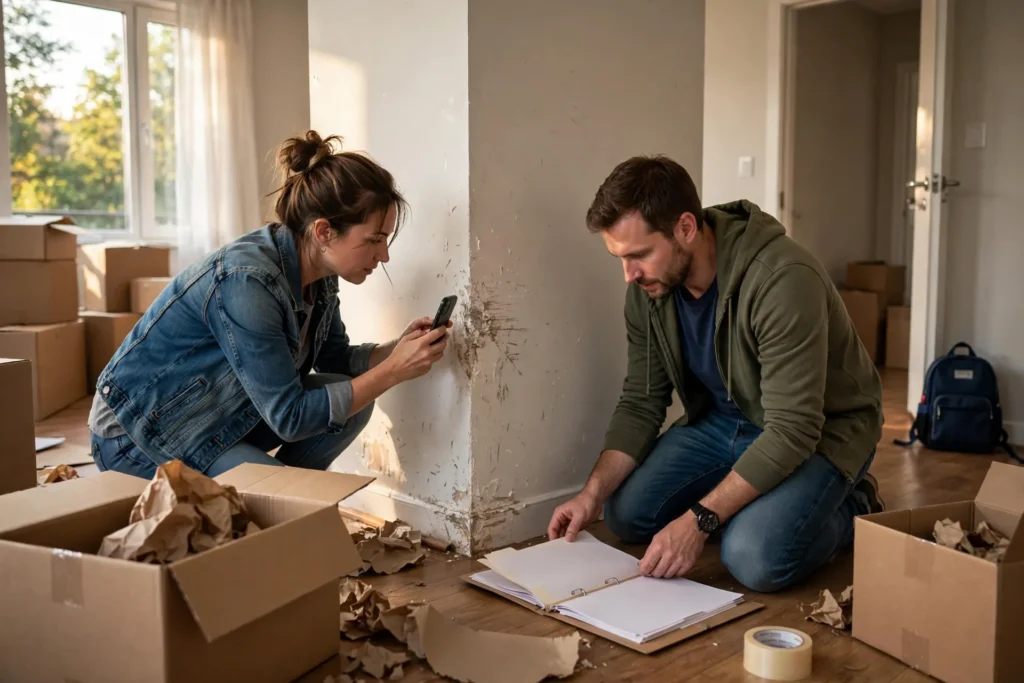
Back-to-school season is one of the busiest times of year for families to move, and that rush is exactly when security deposit records get misplaced. The couples who protect their deposit best treat the paperwork — the signed lease, proof of payment, a move-in condition checklist, dated photos, and messages with the landlord — as a small system they set up before the first school run, not a pile they hope to reconstruct later. This guide shows you which records matter, when to create them, and how to keep them organized through a late-summer move and the school year that follows.
Key Takeaways
- Your security deposit records are a small set of documents: the signed lease, proof you paid the deposit, a move-in condition checklist, dated photos, repair requests, and your move-out forwarding address.
- Back-to-school moves compress everything into a few busy weeks, so set up your record system before school starts, not after.
- Dated photos taken on move-in day are the simplest, strongest record of the home’s condition when you arrived.
- If you are leaving one rental and starting another in the same season, you need records for both homes at once.
- Deposit rules vary by state, by city, and by your lease, so your lease and local housing resources are the authority — not general articles, including this one.
- A five-minute monthly tidy keeps the file complete while school-year life gets busy.
In This Guide
- What “Security Deposit Records” Actually Means
- Why Back-to-School Season Puts These Records at Risk
- The Records to Gather Before You Move In
- Organizing the File Before the School Year Starts
- Records to Keep Adding During the School Year
- Planning a Move-Out That Lands in the Same Busy Season
- When You Are Paying a New Deposit While Waiting on the Old One
- A Worked Example: One Couple’s Back-to-School Move
- Frequently Asked Questions
- Your Next Step
- Related Articles
What “Security Deposit Records” Actually Means
A security deposit is money you pay your landlord around move-in, held during your tenancy and returned in whole or in part when you move out, with deductions handled the way your lease and local rules describe. “Records” is simply the file of documents that proves three things: how much you paid, what condition the home was in when you arrived, and what condition it was in when you left. There is no single official form called a security deposit record. It is a small collection you keep yourself, and its whole job is to make those three facts easy to show later.
If you are new to the topic, our plain-English explainer on what security deposit records are and why they matter covers the basics in more depth. One caution before we go further: deposit amounts, deadlines, and landlord duties differ from place to place, and this article does not try to state your local rules. Your signed lease is the first place to look, and USA.gov can point you toward state and local housing resources in plain language if you need the rules for your area.
Why Back-to-School Season Puts These Records at Risk
Many family leases are timed to the school year, which means move-outs and move-ins pile up in the same few weeks of late summer. At the same time, you are handling school enrollment forms, supply lists, new bus routes, and schedule changes. Paperwork for the old home and the new home arrives simultaneously, boxes are half unpacked, and the phone holding your move-in photos is also the phone fielding messages from school. Records created in that rush tend to be scattered: a checklist in a moving box, a receipt in an email thread, photos mixed in with first-day-of-school pictures.
The risk is not that couples are careless. It is that a busy season buries small documents, and a deposit question might not come up until months later, when memories have faded. The fix is boring and effective: build the file before the rush peaks, and give every record a single home that both partners can open.
The Records to Gather Before You Move In
The signed lease and proof you paid
Keep a complete copy of the signed lease, including any addenda (extra pages added to the standard lease) that mention the deposit, cleaning expectations, or move-out notice. Then save proof of the deposit payment itself: a bank record, a receipt from the landlord, or a confirmation screen capture. These two documents together establish what you agreed to and what you actually handed over, which is the foundation every later question rests on.
The move-in condition checklist
Most landlords offer a move-in checklist — a room-by-room form where you note the condition of walls, floors, appliances, and fixtures. Fill it out on move-in day, not from memory a week later, and note existing wear honestly and specifically: “scuff on hallway wall” is useful; “fine” is not. If your landlord does not provide a form, make your own list and send a copy to the landlord by email so there is a dated record you both share.
Dated photos and short videos
Walk through the empty home and photograph every room, plus close-ups of any existing damage, stains, or worn spots. Most phones record the date automatically in the photo’s details, and that date is what makes the pictures persuasive later. Back the photos up to a shared cloud folder the same day, because a photo that lives only on one phone can vanish with that phone.
Organizing the File Before the School Year Starts
Set up one shared folder — digital, physical, or both — labeled with the home’s address, and agree that everything deposit-related goes there and nowhere else. A short setup session in the calmer week before school starts beats hunting through boxes in October. Here is what the finished file looks like:
| Record | When to create it | Where to keep it |
|---|---|---|
| Signed lease with addenda | At signing | Shared folder, digital copy |
| Deposit payment proof | The day you pay | Shared folder with the bank record |
| Move-in condition checklist | Move-in day | Shared folder; send a copy to the landlord |
| Dated photos and videos | Move-in day and move-out day | Cloud folder both partners can open |
| Repair requests and replies | As they happen | Email thread saved or forwarded to the folder |
| Forwarding address note | Move-out week | Copy kept with the lease file |
This file is one piece of a larger renting system. Our pillar guide to renting a home as a couple covers how leases, deposits, and landlord communication fit together across a whole tenancy, and it is worth reading alongside this article if you are setting up your first shared rental.
Records to Keep Adding During the School Year
The file is not finished at move-in. During the year, add repair requests and your landlord’s replies — putting requests in writing, even a simple email, creates a dated record that a phone call does not. Save rent payment confirmations, any notices your landlord sends, and receipts for anything you repair with the landlord’s written agreement. If something in the home changes, like a new stain from a leak you reported, a quick dated photo keeps the timeline clear.
None of this needs to be a project. Tie it to a five-minute tidy during your regular monthly money check-in: drop the month’s new documents into the folder, glance at the file, and move on. The habit matters more than the system, because the school year will produce a slow trickle of small documents that are easy to lose one at a time.
Planning a Move-Out That Lands in the Same Busy Season
If your lease ends as the next school year approaches, you will be closing one deposit file while opening another. In move-out week, retake photos from the same angles as your move-in set, in the emptied home, and keep your move-in checklist beside you so you can compare room by room. Give your landlord your forwarding address in writing, and keep a copy with the lease file. Then keep the whole file until the deposit is returned and any questions are fully settled — do not delete it in the relief of being done moving.
Life changes can land in the middle of all this, too. If a job change forces a move off the school-year cycle, our companion guide on security deposit records after a job change walks through what changes first and which parts of the file deserve attention when your timeline suddenly shrinks.
When You Are Paying a New Deposit While Waiting on the Old One
School-year timing creates a cash-flow wrinkle worth planning for: the new home’s deposit is usually due at signing, while the old home’s deposit comes back only after you have moved out and the landlord has reviewed the home’s condition, on whatever timeline your lease and local rules describe. For a few weeks, two deposits can be out of your accounts at once. Couples sometimes quietly assume the returned deposit will fund the new one and are caught short when the timing does not line up.
The planning fix belongs in your budget, not your records, but the records help: knowing the old deposit’s amount, and having the file that supports its full return, lets you plan the overlap with real numbers instead of hopes. If the overlap strains your savings, that is useful information to have in spring, when you can build a small moving cushion — not in August, when the lease is already signed. Either way, resist treating the expected refund as money already in hand; plan as if the two deposits overlap completely, and let a prompt return be a pleasant surprise.
A Worked Example: One Couple’s Back-to-School Move
Meet Maya and Daniel, a fictional couple invented for this example. They move into a rented house in mid-August, two weeks before their daughter starts at a new school. Their deposit is $1,800 — an invented, round figure used only to illustrate the story; it is not a typical amount, a limit, or a suggestion for your home. On move-in day, they spend twenty minutes on records before unpacking: the signed lease and payment receipt go into a shared folder, they fill out the landlord’s checklist together, and Maya photographs every room, including a faint stain on the living room carpet that they also note on the checklist.
The following summer, they move out during the same back-to-school rush. Their final statement includes a charge related to that carpet stain. Because their dated move-in photo and the signed checklist both show the stain was there when they arrived, a short, polite email with the photo attached resolves the question, and the charge is removed. Nothing dramatic happened — no dispute, no letters from anyone official. The records simply did their quiet job, because Maya and Daniel had spent twenty calm minutes creating them a year earlier.
Frequently Asked Questions
What counts as a security deposit record?
Anything that documents the deposit and the home’s condition: the signed lease, proof of payment, the move-in and move-out checklists, dated photos, written messages with your landlord, repair requests and replies, and a copy of the forwarding address you provided. There is no official list; completeness matters more than format.
Should one partner keep the records, or both?
Both partners should be able to open the file, even if one of you does the filing. A shared cloud folder works well because either of you can find the checklist or a photo during a busy week without waiting for the other person’s phone, laptop, or memory.
How long should we keep deposit records after moving out?
At minimum, keep them until the deposit has been returned and every question about it is settled. Many couples keep the file longer, alongside other household records, since it also documents where they lived and what they paid. If your area has specific rules about deposit timelines or disputes, your lease and local housing resources are the place to check them.
Do dated photos really make a difference?
Yes, because condition is where most deposit questions live. A photo with a date attached shows what a wall, floor, or appliance looked like on a specific day, which is much harder to argue with than either side’s memory a year later. Take wide shots of each room plus close-ups of anything already worn or damaged.
What if we disagree with a deduction from our deposit?
Start with your own file: compare the deduction against your lease, your move-in checklist, and your photos, then put your questions to the landlord in writing, calmly and specifically. If you cannot resolve it together, USA.gov can direct you to state and local tenant resources for your area. This article offers general information only, not legal advice about your situation.
We moved in a hurry and skipped the checklist. Is it too late?
No. Take dated photos now, write down the home’s current condition, and send a friendly note to your landlord noting anything that was already worn when you arrived. Late records are weaker than move-in-day records, but they are far better than none, and starting the file today still protects the rest of your tenancy.
Your Next Step
This week, create one shared folder for your current rental and put two things in it: your signed lease and your proof of deposit payment. If you are moving in soon, add one calendar note for move-in day — “checklist and photos before unpacking” — so the two most valuable records get created before the back-to-school rush begins.
Related Articles
- Renting as a Team: Leases, Deposits, and Getting Along With Landlords
- What Is Security Deposit Records? A Plain-English Guide for Couples
- Security Deposit Records After a Job Change: What Changes First
This article is for general educational purposes only and is not financial, tax, legal, or investment advice. Consult a licensed professional about your situation.